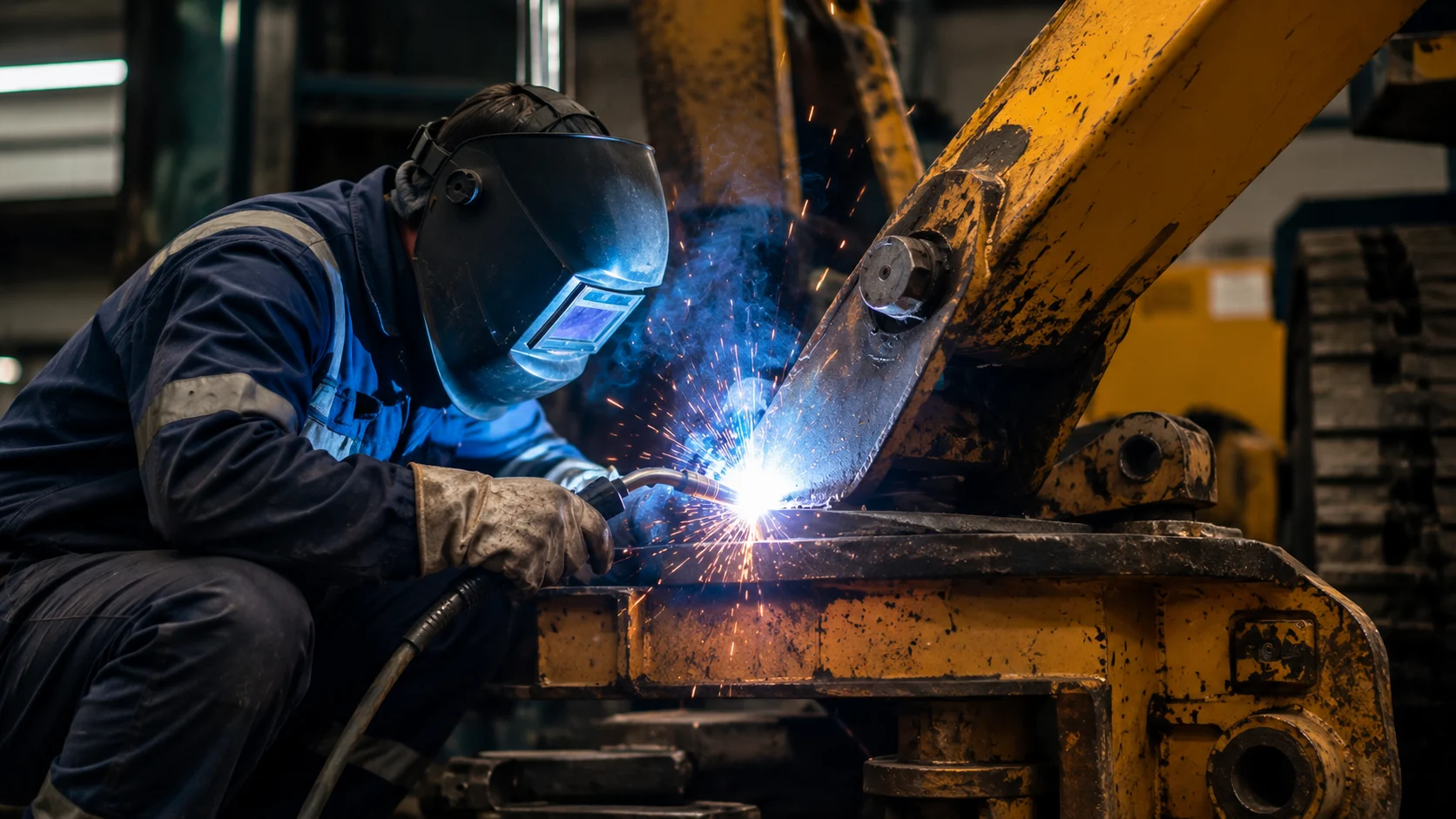
Welding is a fundamental process in modern industry, enabling the joining of metals for construction, manufacturing, and repairs. Understanding the different types of welding used in industrial applications helps businesses select the right method for efficiency, safety, and durability. In Australia, industrial operations rely on several key welding techniques, each suited to specific metals, thicknesses, and environmental conditions.
Common Welding Techniques in Industrial Applications
Industrial welding in Australia employs a variety of techniques. Each has distinct advantages depending on the project requirements:
- Shielded Metal Arc Welding (SMAW): Known as stick welding, this method is versatile and widely used for steel structures. It provides strong welds for heavy machinery, pipelines, and construction frameworks.
- Gas Metal Arc Welding (GMAW/MIG): Popular for production lines, MIG welding offers speed and consistency. It works well with steel, aluminium, and other metals common in Australian factories.
- Gas Tungsten Arc Welding (GTAW/TIG): TIG welding ensures high-quality, precise welds, making it ideal for specialised applications like aerospace, automotive components, and stainless steel fabrication.
- Flux-Cored Arc Welding (FCAW): Often used outdoors or on thick materials, FCAW handles environmental conditions better and provides deep penetration for structural steel projects.
- Submerged Arc Welding (SAW): Employed in large-scale industrial fabrication, SAW creates strong, defect-free welds for ships, storage tanks, and heavy machinery components.
Factors Influencing Welding Choice
Choosing the right type of welding depends on material, thickness, accessibility, and project scale. Industrial operators must also consider:
- Metal type (steel, aluminium, stainless steel)
- Required strength and load-bearing capacity
- Environmental conditions, such as outdoor exposure or confined spaces
- Production speed and cost-efficiency
- Compliance with Australian Standards like AS/NZS 1554 for structural welding
Using the correct welding method not only improves structural integrity but also ensures safety compliance and longevity of industrial assets.
Advantages of Professional Industrial Welding
Professional welding services, such as those provided by P A Welding, offer significant benefits:
- Expertise and Precision: Experienced welders ensure high-quality joints that meet industrial standards.
- Equipment and Safety: Industrial-grade welding equipment and safety protocols reduce risks of accidents and material failure.
- Efficiency: Professionals complete complex welding tasks faster, saving time on large-scale projects.
- Maintenance and Repairs: Skilled welders can diagnose issues, repair welds, and maintain structural integrity of machinery or infrastructure.
Employing professional welders prevents costly downtime and guarantees reliable results, especially on critical industrial projects.
When to Call a Professional
Industrial welding projects often require certified expertise. Call P A Welding when you need:
- Structural steel fabrication or heavy machinery welding
- Repairs on pipelines, storage tanks, or industrial equipment
- High-precision welding on stainless steel or aluminium components
- Compliance with safety regulations and quality standards
Professional industrial welders ensure the job is done correctly, minimising risks and maximising durability for long-term performance.
Conclusion
Understanding the different types of welding used in industrial applications allows businesses to make informed decisions about materials, methods, and service providers. From SMAW and MIG to TIG and SAW, each technique has a specific purpose and advantage. Partnering with experienced welders like P A Welding ensures quality, safety, and efficiency for your industrial projects in Australia. Invest in professional expertise to protect your assets and keep operations running smoothly.
FAQ
Q1: What welding type is best for heavy steel structures?
A: Stick welding (SMAW) or flux-cored arc welding (FCAW) are commonly used due to their strong penetration and reliability.
Q2: Can aluminium be welded using MIG or TIG methods?
A: Yes, MIG (GMAW) and TIG (GTAW) welding are both suitable for aluminium, with TIG providing higher precision.
Q3: Is professional welding necessary for industrial projects?
A: Absolutely. Certified welders ensure structural integrity, compliance with Australian Standards, and reduce safety risks.
Q4: How does environmental condition affect welding choice?
A: Outdoor or windy conditions may require flux-cored arc welding (FCAW) for consistent results, while indoor controlled environments suit MIG or TIG welding.