If you are wondering how much does welding cost, Australian welding services commonly range from about $80 to $150 per hour in 2026. Your final price in Brisbane depends on the metal, welding process, job size, preparation required, accessibility and whether fabrication or on-site work is involved.
A small repair may only require a short workshop job, while structural steelwork, custom fabrication or a complicated mobile welding project can require several hours of preparation and welding. Understanding what affects the quote can help you budget properly and avoid comparing prices that cover very different levels of work.
How Much Does Welding Cost in Brisbane?
For many general welding jobs, an hourly rate of approximately $80 to $150 provides a useful starting point. Published Australian cost data for 2026 puts structural welding around $80 to $120 per hour, pipe welding around $100 to $150 per hour, and custom fabrication around $80 to $150 per hour.
These figures are general Australian averages rather than fixed Brisbane prices. A welder may instead provide a project-based quote, particularly where the dimensions, materials and fabrication requirements are known beforehand.
For example, repairing a simple steel bracket is very different from fabricating a custom gate, modifying structural steel or welding pipework. The amount of cutting, grinding, measuring and finishing required can sometimes take longer than the welding itself.
What Factors Affect Welding Prices?
When asking how much does welding cost, the number of welding hours is only one part of the calculation.
Common pricing factors include:
- Type of metal: Mild steel is generally straightforward to work with, while stainless steel, aluminium and specialised alloys can require different equipment, consumables and techniques.
- Material thickness: Thicker steel often needs more preparation, welding passes and heat input.
- Welding process: MIG, TIG and stick welding each suit different applications and can involve different labour requirements.
- Project complexity: Detailed fabrication, difficult joint positions and tight tolerances can increase labour time.
- Site access: Mobile welding at a difficult-to-access property or construction site can take longer than workshop fabrication.
- Preparation: Rust, paint, galvanising, damaged metal or previous welds may need to be removed before a sound weld can be produced.
- Finishing: Grinding, polishing, coating preparation and cleanup can add extra labour.
Providing accurate measurements, photos and information about the material can help a welding business give you a more useful initial estimate.
Workshop Welding Versus Mobile Welding
Workshop welding is often the most practical option when the item can be safely transported. The welder has immediate access to fabrication benches, cutting equipment, clamps and other tools, which can make the job more efficient.
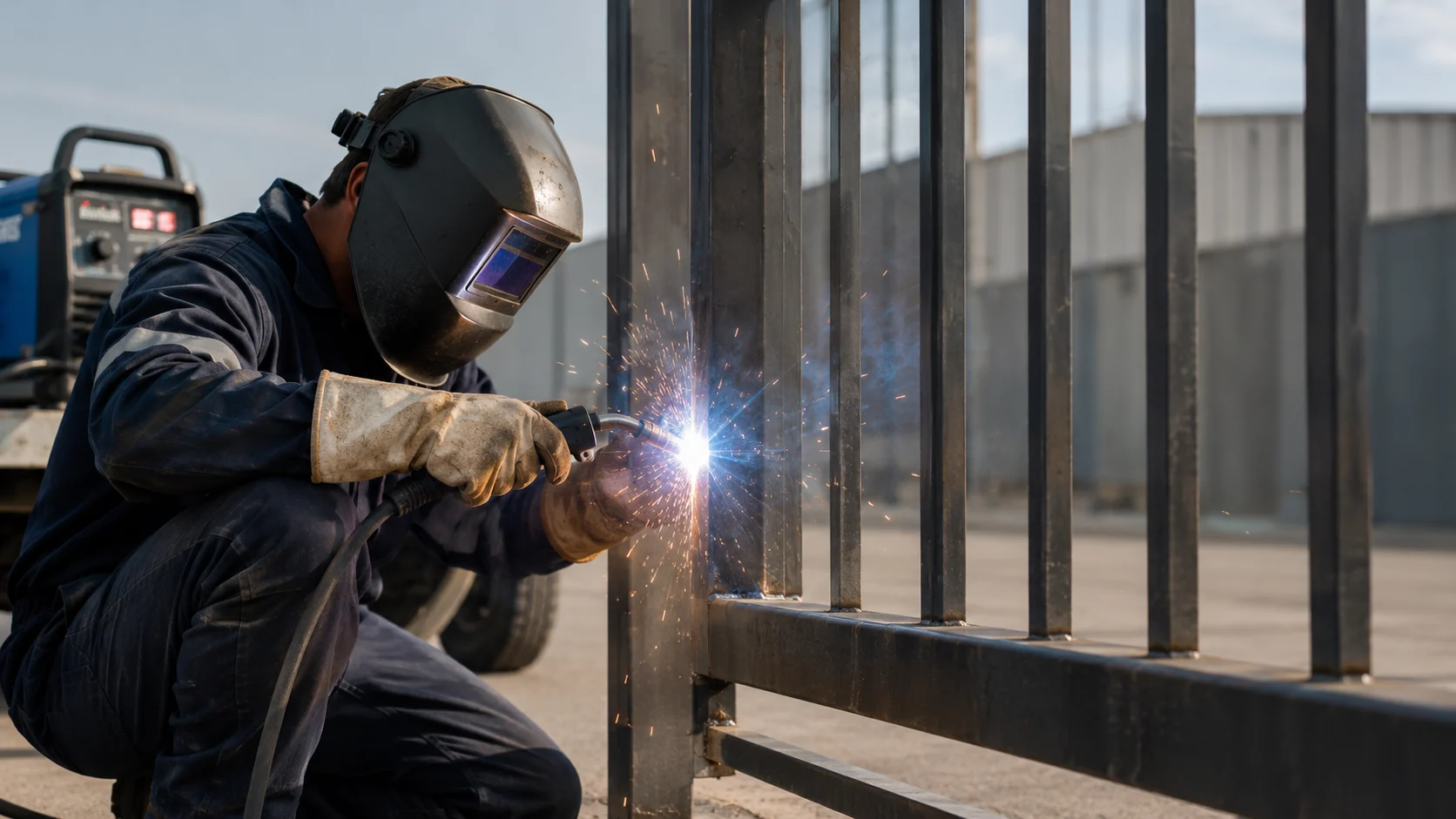
Mobile welding is useful when the item cannot easily be moved. Examples include gates, structural steel, machinery, trailers and installed metal components around Brisbane properties or workplaces.
On-site work may involve travel, equipment setup and additional safety considerations. Because of this, mobile welding may include a minimum service charge or travel component in addition to labour and materials.
Does the Type of Welding Change the Cost?
Yes. The welding method can affect both labour time and the equipment required.
MIG welding is commonly used for mild steel fabrication and repair work. It can be efficient for many general fabrication projects.
TIG welding gives the welder greater control and is often selected for stainless steel, aluminium and projects where appearance or precision matters. TIG welding can take longer than MIG welding on some jobs.
Stick welding, also known as manual metal arc welding, is commonly used for structural, repair and outdoor applications. It performs well on heavier materials and in conditions where some other processes are less practical.
A qualified welder should select the process based on the material, joint design, required strength and application rather than simply choosing the quickest option.
How Much Do Small Welding Repairs Cost?
Small jobs are not always priced by multiplying an hourly rate by a few minutes of welding.
A straightforward crack or bracket repair may still require inspection, cleaning, preparation, equipment setup, welding and finishing. Many businesses therefore use a minimum workshop or call-out charge.
Before requesting a quote, take clear photos of the damaged area and explain what the item is used for. Mention whether it carries weight, forms part of a structure or has failed before.
Avoid attempting temporary weld repairs yourself on load-bearing components unless you have the required welding skills and equipment. An unsuitable weld can hide cracking without restoring the required strength.
Custom Metal Fabrication Costs
Custom fabrication usually involves more than joining two pieces of metal.
A fabricator may need to measure, mark out, cut, drill, bend, tack, check alignment, weld and finish the completed item. Steel sections, plate, consumables and other materials also contribute to the quote.
Projects such as frames, brackets, gates, supports and machinery components can therefore vary widely in price even when they appear similar in size.
P A Welding can assess the dimensions, materials and intended use before providing a quote for fabrication or welding work in Brisbane.
Structural Welding and Australian Standards
Structural welding requires particular attention because weld quality can affect the safety and performance of a structure.
Australian structural steel fabrication may involve standards including AS 4100, AS/NZS 5131 and relevant parts of the AS/NZS 1554 structural welding series, depending on the project. Standards Australia describes AS/NZS 5131 as covering requirements for fabrication, welding, surface preparation and erection of structural steelwork.
For structural work, price should not be the only factor you consider. Suitable welding procedures, materials, qualifications and inspection requirements may need to be confirmed before work begins.
How Can You Keep Welding Costs Under Control?
You can make the quoting and fabrication process easier without compromising workmanship.
Start by providing accurate dimensions and several clear photos. If possible, identify the material and explain exactly how the finished component will be used.
Avoid making major cuts or modifications before speaking with the fabricator. Incorrect preparation can create additional repair work.
For custom fabrication, decide on the basic dimensions and function before production begins. Changes after cutting or welding has started can increase both material use and labour.
When to Call a Professional
Contact a professional welder when the job involves structural components, significant cracking, aluminium or stainless fabrication, load-bearing parts, machinery, gates, frames or repairs where failure could create a safety risk.
You should also seek professional advice when you cannot identify the metal or determine why an existing weld has failed. Simply welding over a cracked joint may not correct the underlying problem.
If you need a clearer answer to how much does welding cost for your specific Brisbane project, provide P A Welding with photos, approximate dimensions, material details and a description of the work. A project-specific quote will be more useful than relying on a general hourly figure.
Conclusion
So, how much does welding cost in Brisbane? As a broad 2026 guide, many Australian welding services fall around $80 to $150 per hour, although the actual amount depends on the material, process, preparation, job complexity and whether the work happens on-site or in a workshop.
Small repairs may be relatively straightforward, while structural welding and custom fabrication require more planning and labour. For an accurate price, have the project assessed rather than relying solely on an hourly average.
Contact P A Welding with your project details to discuss the welding or fabrication work you need in Brisbane and obtain a quote based on the actual job.
Frequently Asked Questions
How much does a welder charge per hour in Australia?
Australian welding rates commonly fall between about $80 and $150 per hour in 2026. Structural welding is commonly listed around $80 to $120 per hour, while pipe welding and some custom fabrication can reach approximately $150 per hour.
Why is welding expensive?
Welding prices cover more than the time spent creating the weld. Preparation, cutting, measuring, consumables, equipment, materials, setup, finishing and the skill required to produce a suitable joint can all contribute to the cost.
Is MIG or TIG welding more expensive?
TIG welding can cost more for some projects because it is generally slower and requires greater control. The best process depends on the metal, thickness, finish and intended use rather than price alone.
Can a welder give me a quote from photos?
Photos can help a welder provide an initial estimate, particularly for straightforward repairs. Accurate dimensions, material information and details about access or structural requirements may still be needed before a final quote can be confirmed.