
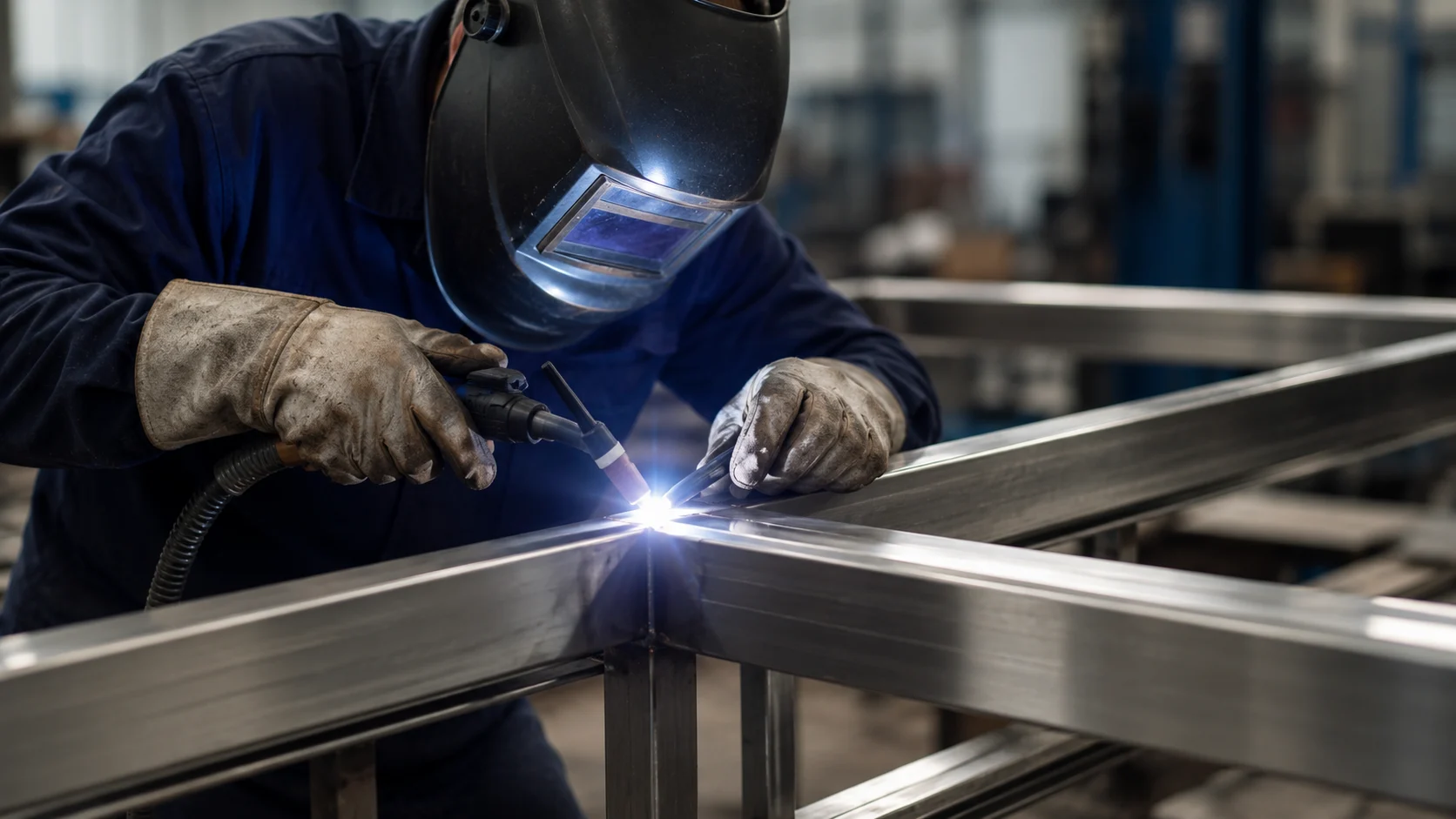
Welding stainless steel can be tricky if you’re new to metalwork. In simple terms, how do you weld stainless steel comes down to choosing the right process, preparation and technique — and understanding why stainless behaves differently to mild steel.
At P A Welding, we help Aussies with stainless steel projects every week, from structural frames to kitchen benches, so you can feel confident tackling your next job the right way.
What Makes Stainless Steel Different to Weld?
Stainless steel has a high chromium content that gives it corrosion resistance. But that same chemistry can also make it:
- Prone to warping
- Sensitive to heat input
- Susceptible to discolouration and weld contamination
This means getting good welds isn’t just about melting metal together — it’s about controlling heat, cleanliness and technique.
Common Welding Processes for Stainless Steel
Choosing the right welding method is key. The most common processes used in Australia include:
MIG Welding (GMAW)
MIG welding is user‑friendly and reliable for thinner stainless sections.
- Uses a continuous wire electrode
- Works well with a shielding gas like 98% argon + 2% oxygen
- Great for fabrication and maintenance work
TIG Welding (GTAW)
TIG welding gives the best quality and finished appearance.
- Precise heat control
- Ideal for thin or aesthetic work
- Requires more skill but produces cleaner welds
Stick Welding (SMAW)
Stick welding is rugged and portable.
- Good for thicker materials and outdoor use
- Requires correct stainless electrodes
- Slower than MIG/TIG but effective
Step‑by‑Step: How Do You Weld Stainless Steel
- Prepare Your Material
Clean the surface with a stainless steel brush. Remove oil, grease and mill scale — contamination causes weld defects. - Choose the Right Filler
Match filler metal to the base stainless grade (e.g., 316 to 316). This avoids weak zones in the weld. - Set Up Your Machine
Use appropriate settings:- Lower heat than mild steel
- Correct gas flow (10–15 L/min typical for TIG/MIG)
- Suitable electrode type/diameter
- Control Heat Input
Stainless steel expands and contracts more than carbon steel. Keep heat low and avoid long welds without breaks. - Weld with Clean Technique
Move steadily and avoid stopping in one place. Continuous movement helps reduce heat build‑up. - Post‑Weld Cleaning
Use a stainless brush after welding to remove discolouration. This helps corrosion resistance and finish quality.
Heat Control and Distortion Prevention
One of the biggest challenges with stainless is distortion. Tips to manage heat include:
- Tack weld before running full beads
- Use back‑stepping techniques
- Clamp and brace work to reduce movement
- Weld shorter sections then let cool naturally
Avoiding Common Mistakes
Even experienced welders slip up. Watch out for:
- Contamination: Never use a carbon steel brush on stainless — it transfers iron particles
- Excessive Heat: This leads to warping and brittle welds
- Wrong Filler: Can cause corrosion and cracking
Cleaning tools, correct gas selection and proper technique stop these problems before they start.
Safety First: What You Need to Know
Welding stainless steel produces fumes that include chromium oxides. Always:
- Work in a well‑ventilated area
- Wear respiratory protection where necessary
- Use welding helmets and gloves rated for stainless work
Following Australian workplace safety standards ensures you protect your health on every job.
When to Call a Professional
Some stainless steel welding jobs need expert attention — especially if they involve:
- Structural integrity (load‑bearing frames)
- Food‑grade surfaces (benches or commercial kitchens)
- Complex geometries or tight tolerances
If you want precision, compliance with Australian standards, and a finish that lasts, call P A Welding. Our team can handle stainless projects of all sizes and deliver results you can trust.
Conclusion
So, how do you weld stainless steel? It starts with preparation, the right process (TIG, MIG or stick), and careful control of heat and cleanliness.
Whether you’re DIYing small parts or planning a big build, understanding the basics will improve your outcomes. And when the job’s critical or you want top‑tier results, reach out to P A Welding for experienced stainless steel welding services in Australia.
FAQs
1. Is TIG or MIG better for stainless steel welding?
TIG gives cleaner, more precise welds — ideal for thinner or high‑finish work. MIG is easier and faster for thicker sections.
2. Do I need special gas for stainless steel welding?
Yes. Argon‑based shielding gas is common. Some mixes include small amounts of oxygen or helium depending on the process.
3. Can I weld stainless to carbon steel?
It’s possible with the right filler and technique, but challenging. Professional assessment is recommended to avoid corrosion issues.
4. How do I prevent stainless steel from warping during welding?
Reduce heat input, use tack welds, and let sections cool between passes to minimise distortion.